Property · 7 min read · 30 August 2026
Unattended death cleaning and biohazard clearance, explained honestly
Written by Simon D Campbell, Director, Shropshire Expert Cleaners LTD · 17 years in bereavement, trauma and hospital-standard cleaning
The short answer
When a death is not discovered for some time, bodily fluids are a biohazard and contamination spreads into flooring, underlay and plaster. Families should not clean it themselves; a specialist should survey, contain, remove contaminated materials, disinfect and treat odour, with documented waste disposal.
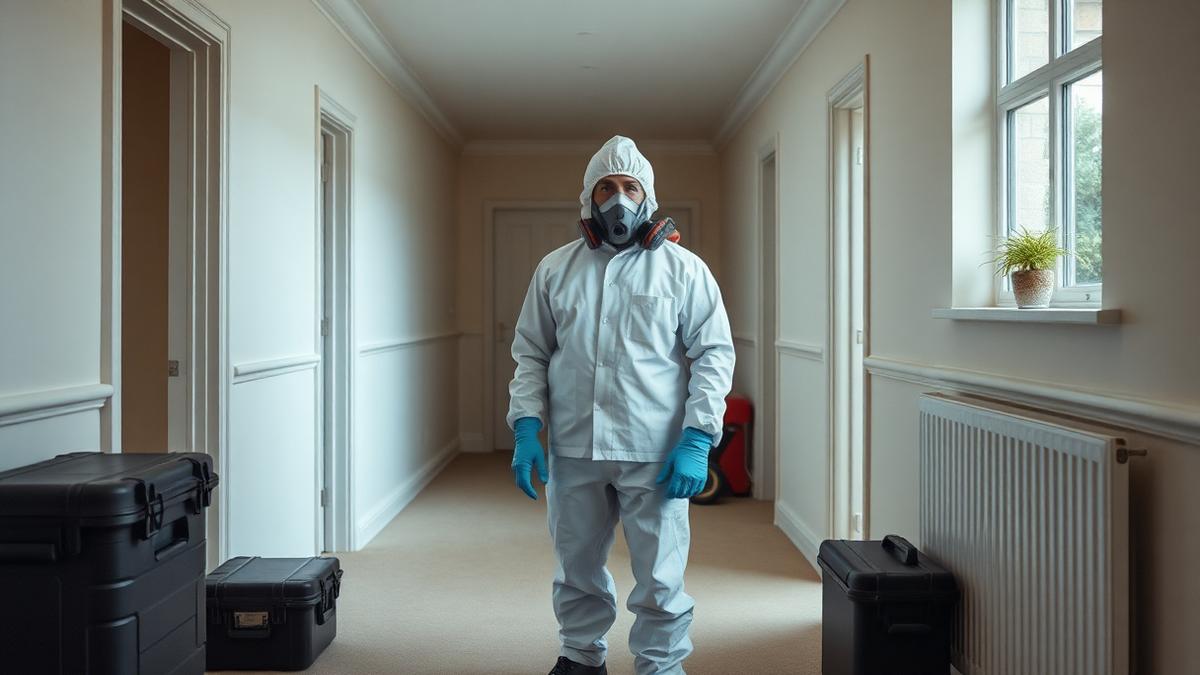
When a death is not discovered for some time, the property itself becomes a health matter as well as a grief matter. This article is written from 17 years of bereavement, trauma and hospital-standard cleaning work in Shropshire and the West Midlands, and it is deliberately not a sales pitch — you can use any competent local provider.
Why this is not ordinary cleaning
Bodily fluids are treated as a biohazard. Contamination travels further than it looks: through carpet into underlay, into floorboards, into plasterboard, and along joists. Flies and other insects spread it around the room. Domestic cleaning products and a hot wash do not resolve it, and the odour returning after a few warm days is the usual sign that the source was never removed.
What families should not do
Do not attempt the clean yourself, and do not send a family member in 'just to look'. There is a real risk of blood-borne infection from sharps, and a real risk of lasting distress from what you see and smell. If the property has been closed up for weeks, expect insects and staining, and expect the smell to be far stronger than you are prepared for.
What a proper decontamination looks like
A survey and written scope first. Containment of the affected area. Removal and controlled disposal of contaminated soft furnishings, carpet, underlay and, where needed, sections of floor or plaster. Cleaning and disinfection of hard surfaces, then odour treatment at source rather than masking. Finally, verification that the area is safe to reoccupy, with a written record for the executor, insurer or landlord.
The same discipline applies in hospital and care settings, where infection control, sharps handling and documented waste transfer are routine rather than optional.
Pests, hoarding and sequence
Where a property is also heavily cluttered, sequence matters. Pest treatment normally comes before clearance, or you simply move the infestation into the van and out to the next site. Fly and wasp activity, rodent droppings and sharps all change the method and the PPE.
How to check a company is legitimate
Ask for public liability insurance, a waste carrier licence number, the disposal route for clinical waste, and a written, itemised quote. Ask whether the technicians hold current training in blood-borne pathogens and confined working. A legitimate firm will provide all of that without hesitation and will give you waste transfer notes for what leaves the property.
Some insurers cover decontamination under buildings or contents cover, so check the policy before you pay privately.