Planning ahead · 5 min read · 21 October 2026
Last wishes booklet UK: recording funeral and personal wishes
Written by Simon D Campbell, Director, Shropshire Expert Cleaners LTD · 17 years in bereavement, trauma and hospital-standard cleaning
The short answer
A last wishes booklet records funeral preferences, personal messages, important contacts and where documents are kept; it is not a will. The After They Die UK End-of-Life Planner includes those sections alongside practical records for your family, with Standard and Large Print fillable PDFs written for England and Wales.
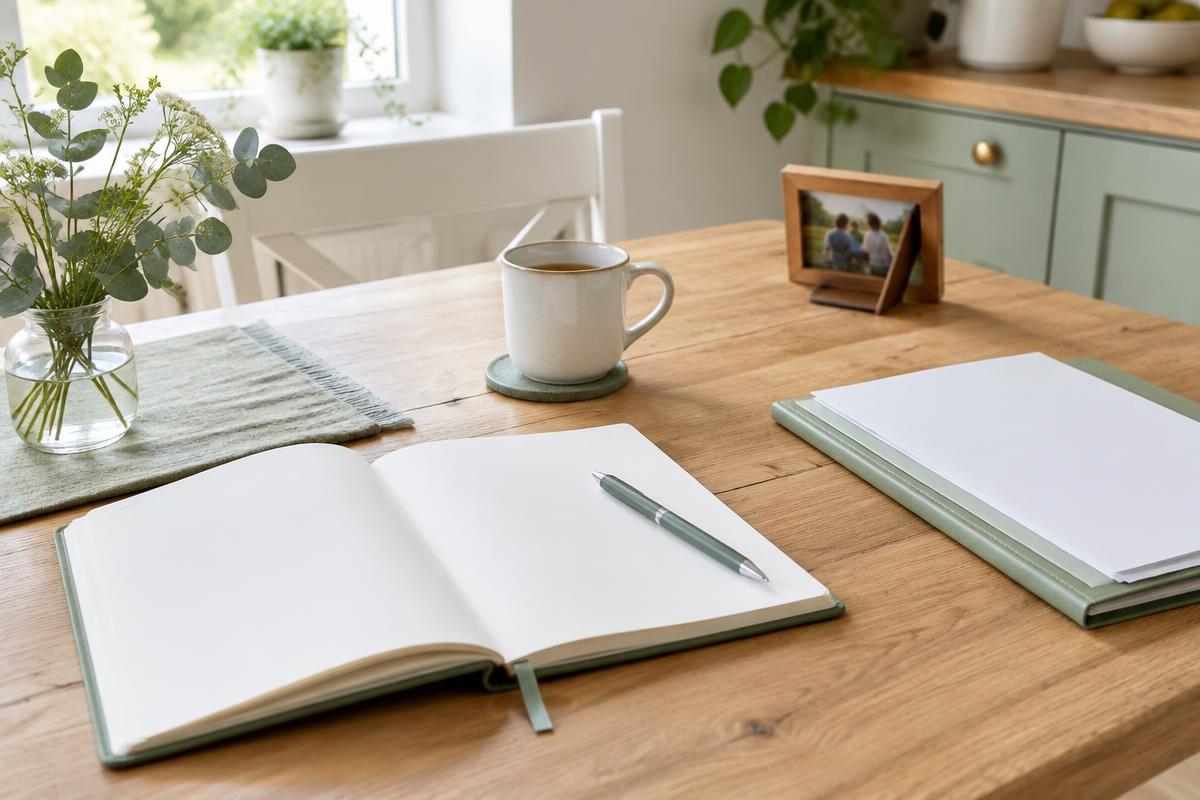
A last wishes booklet is a place to write down what you would like your family to know: funeral preferences, personal messages, important contacts and where documents are kept. It is a practical record, not a will. This guide focuses on recording those wishes using the After They Die UK End-of-Life Planner, which is written for England and Wales.
You do not have to decide everything in one sitting. Begin with what you already know and leave anything uncertain for another day. The aim is to make useful information easier to find, not to create another task you feel you must finish perfectly.
What should you write in a last wishes booklet?
Start with the people you would want contacted, the wishes you would like them to know, and the location of your important papers. In our planner, these sit alongside information about your people and professionals, pets and dependants, belongings and keepsakes, and personal messages. Fill in what applies and skip what does not.
Keep a distinction between a preference and information someone needs to find. For example, the music you would like at a funeral is a preference; the location of your will and the name of your executor are practical information. Both can help, but a booklet does not replace a valid will.
Record your funeral wishes in your own words
The planner's funeral wishes section covers burial or cremation, music, readings and who to invite. You can begin with just one of those. If you know which music matters to you but have not decided about a reading, write down the music and return to the rest later.
Someone helping you can write with you, but the record should reflect your own wishes. It is fine to leave a space blank where you have not made a decision. You can look through the planner again when your circumstances change.
Leave personal messages and practical information together
Personal messages and keepsakes can sit alongside the everyday details your family may need. Our planner includes sections for belongings and keepsakes, personal messages, pets and dependants, your people, and who needs to be told. It also includes a Start here page for your family: what to do first and who to call.
You may find it easier to begin with names and contact details, then come back to more personal pages. There is no need to write a long message simply because space is available. Write what you want to share.
Record where documents are kept, not passwords
A useful record points people towards documents and the people who know where they are. The planner covers the location of your will, deeds, pension letters, vehicle log book and other important papers, together with contacts such as a solicitor, GP, accountant or financial adviser.
Never write passwords, PINs or full account numbers. For bank and savings accounts, record the bank name and only the last four digits. For digital accounts, record where access details are kept and who knows, rather than copying the passwords into the booklet.
Keep a printed copy securely with your important papers and a digital copy on a device with a passcode. Take care with cloud backups and sharing. Tell two or three people you trust where the planner is kept so they know how to find it.
Last wishes booklet or end-of-life planner?
If you are mainly thinking about funeral preferences and personal messages, those are a useful starting point. The After They Die end-of-life planner goes further: it also records documents, money, property, regular payments, digital life and the people your family may need to contact. You can start with your wishes and add the practical sections when you are ready.
It is not a will or legal advice, and it does not replace a valid will. It records where your will is kept and who your executor is. Although many personal-information pages are useful anywhere, the planner is written for England and Wales; legal steps after a death differ in Scotland and Northern Ireland.
Can you fill it in on screen or print it?
Yes. The planner is a fillable PDF: open it in the free Adobe Acrobat Reader app on a computer, tablet or phone, type into the boxes and save as you go. Reopen your saved copy to check your answers are there, because browsers and PDF viewers may handle saving differently. Your answers are not submitted to this website.
If you prefer handwriting, print on A4 at Actual size (100%). Standard and Large Print editions have the same sections; Large Print has bigger text and more room to write. You can also type some sections and handwrite the rest.
What is included, and when should you review it?
One £9.99 Etsy purchase includes three PDF files: the Standard planner, the Large Print planner and a two-page Start here guide. It is a digital download, not a physical booklet sent in the post. The free family guide on this website remains free and helps with the steps after a death.
Look through your planner once a year and when your circumstances change. The planner includes a review log. You can begin with a page or two now, save your copy, and come back to the rest when you want to.